



EU REACH Adds PFAS Silane Water Repellent Ban




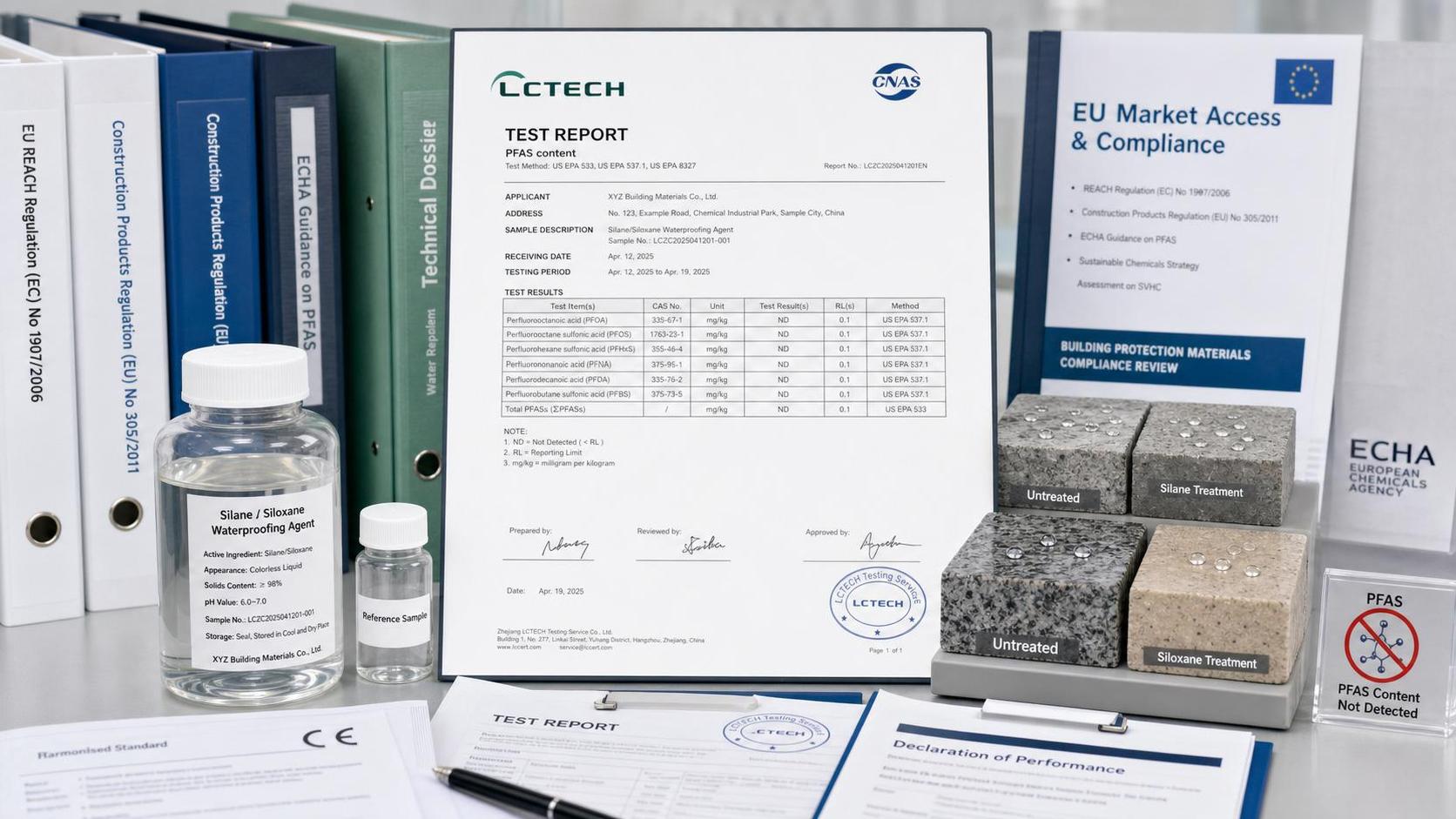
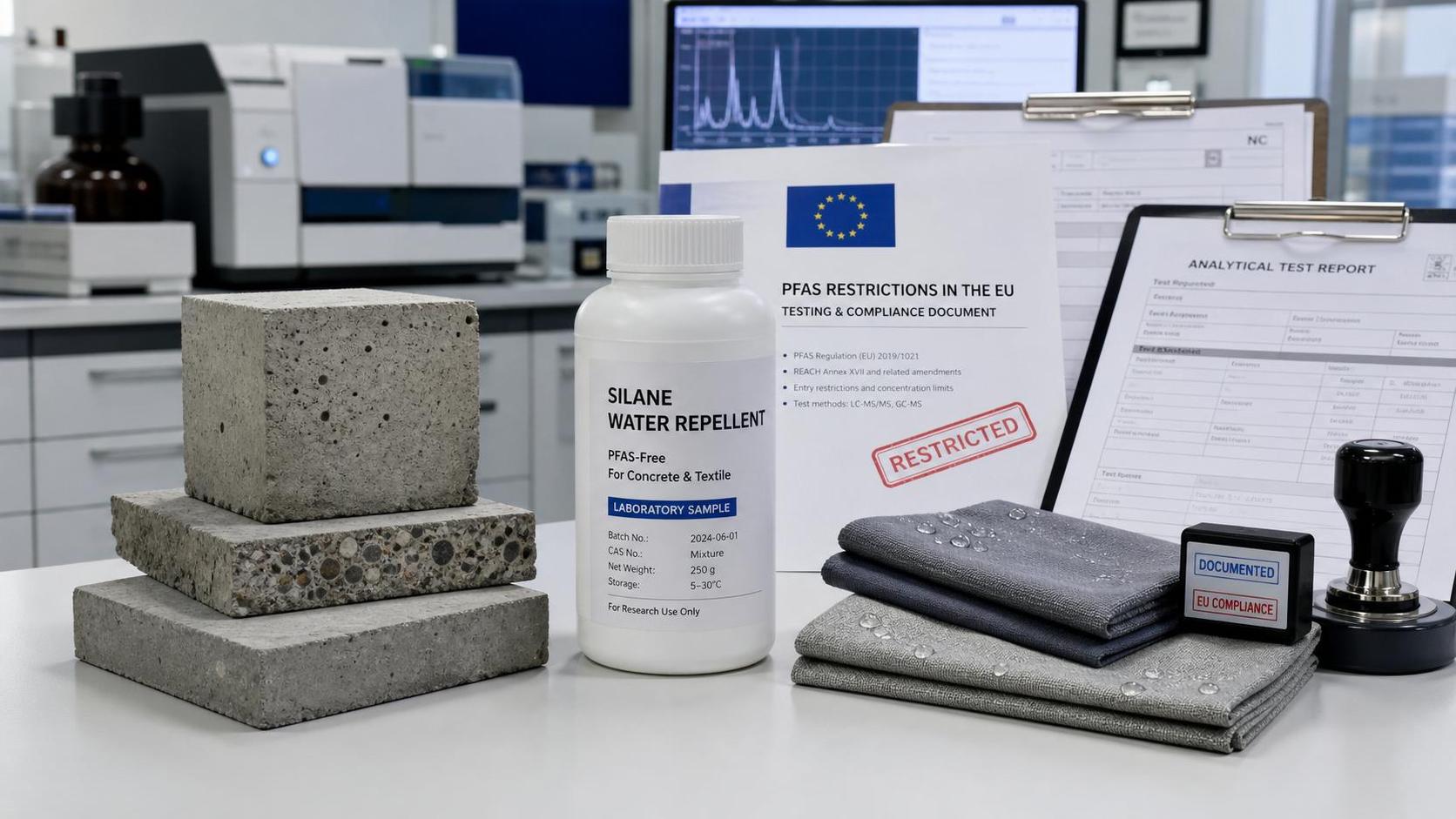
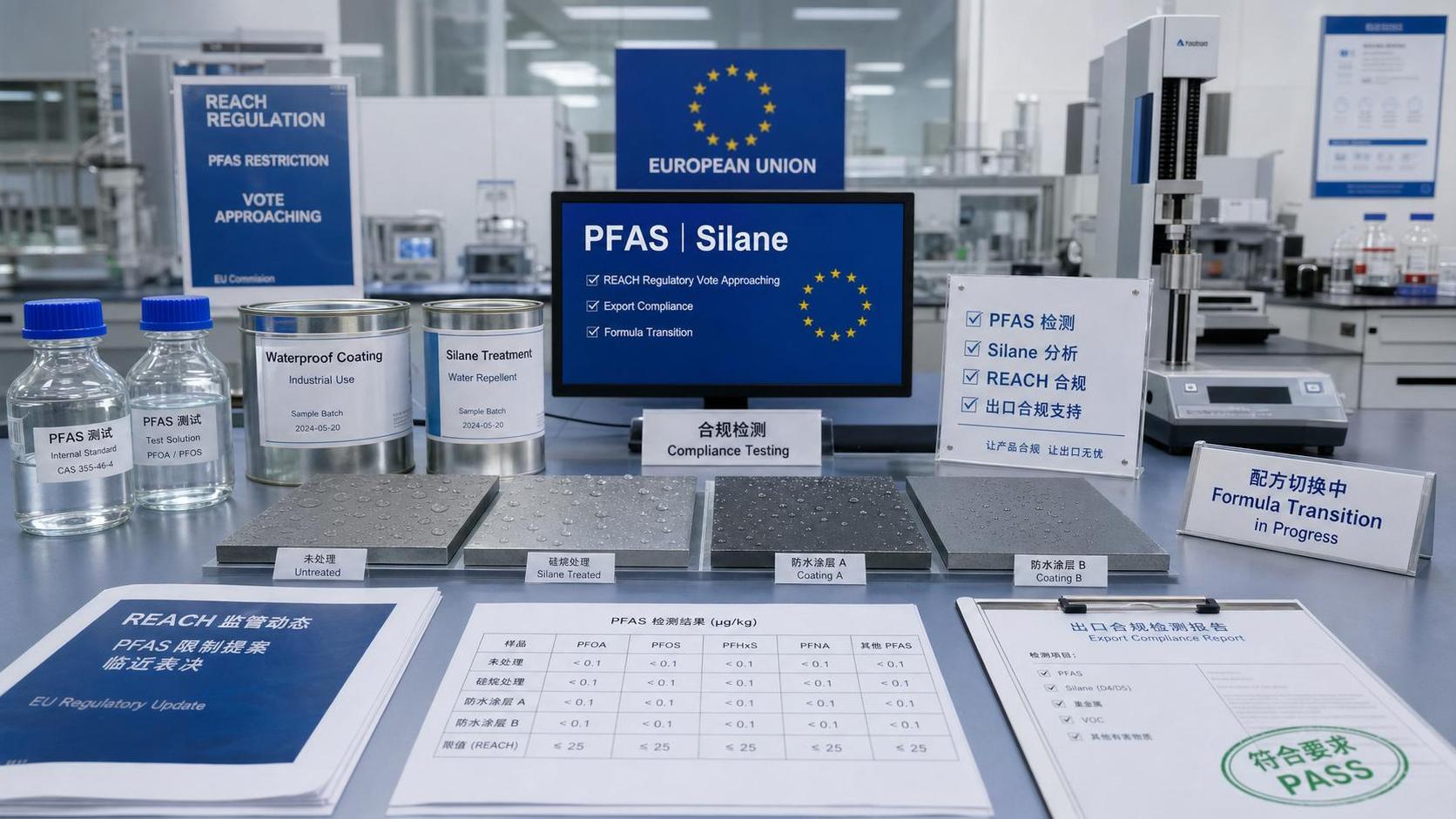
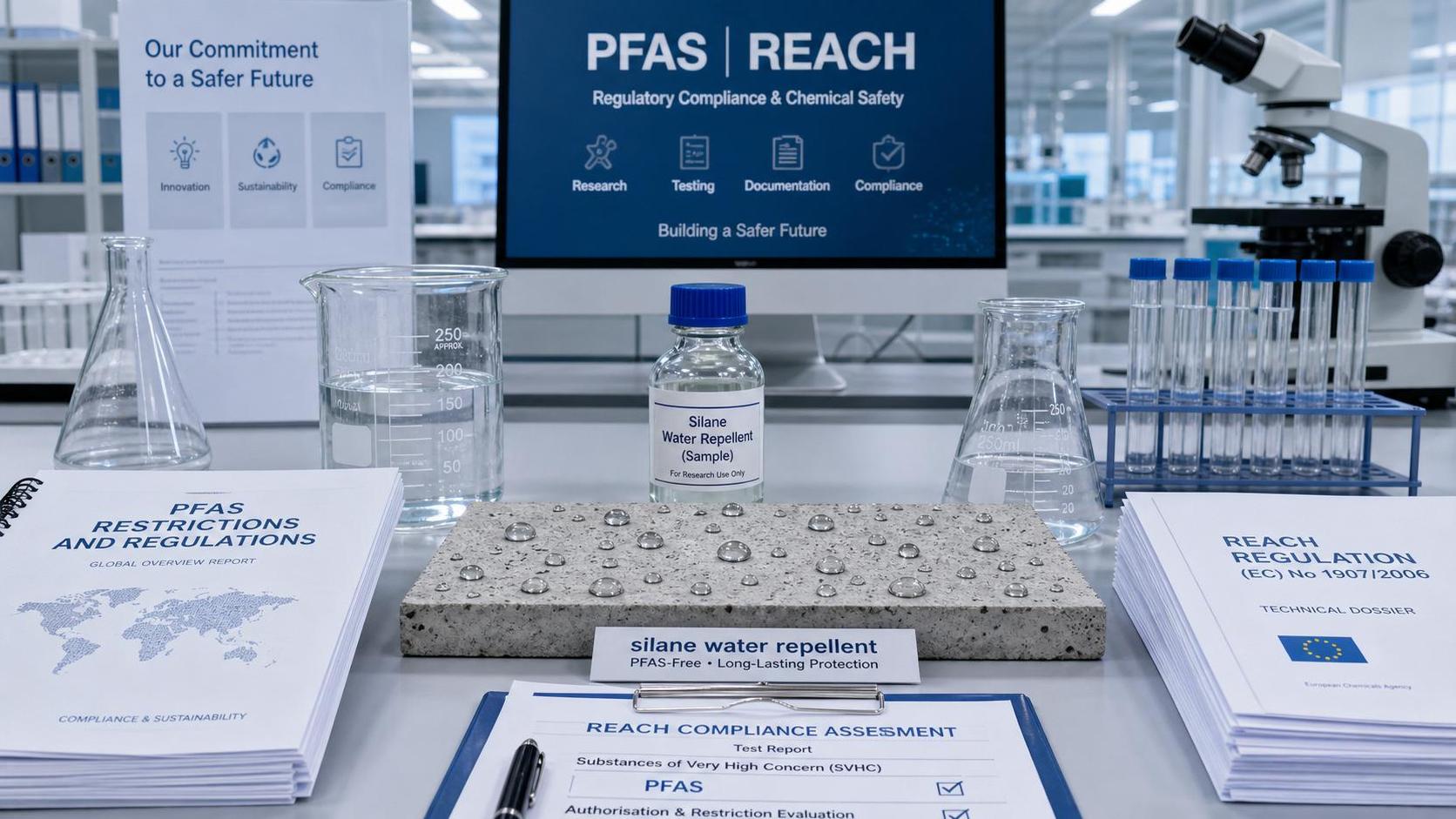
On July 12, 2026, the European Commission released Regulation (EU) 2026/1387, adding PFAS-based silane water repellents to Entry 77 of REACH Annex XVII and setting a ban on placing them on the EU market or using them from October 1, 2026. For suppliers involved in building protection, concrete sealing, stone waterproofing, and related silane water repellent trade, this is not only a product restriction update but also a direct compliance and customs documentation issue, because importers will need a declaration of conformity and a PFAS test report with LOD less than or equal to 25 ng/g before clearance.
What the new restriction formally covers
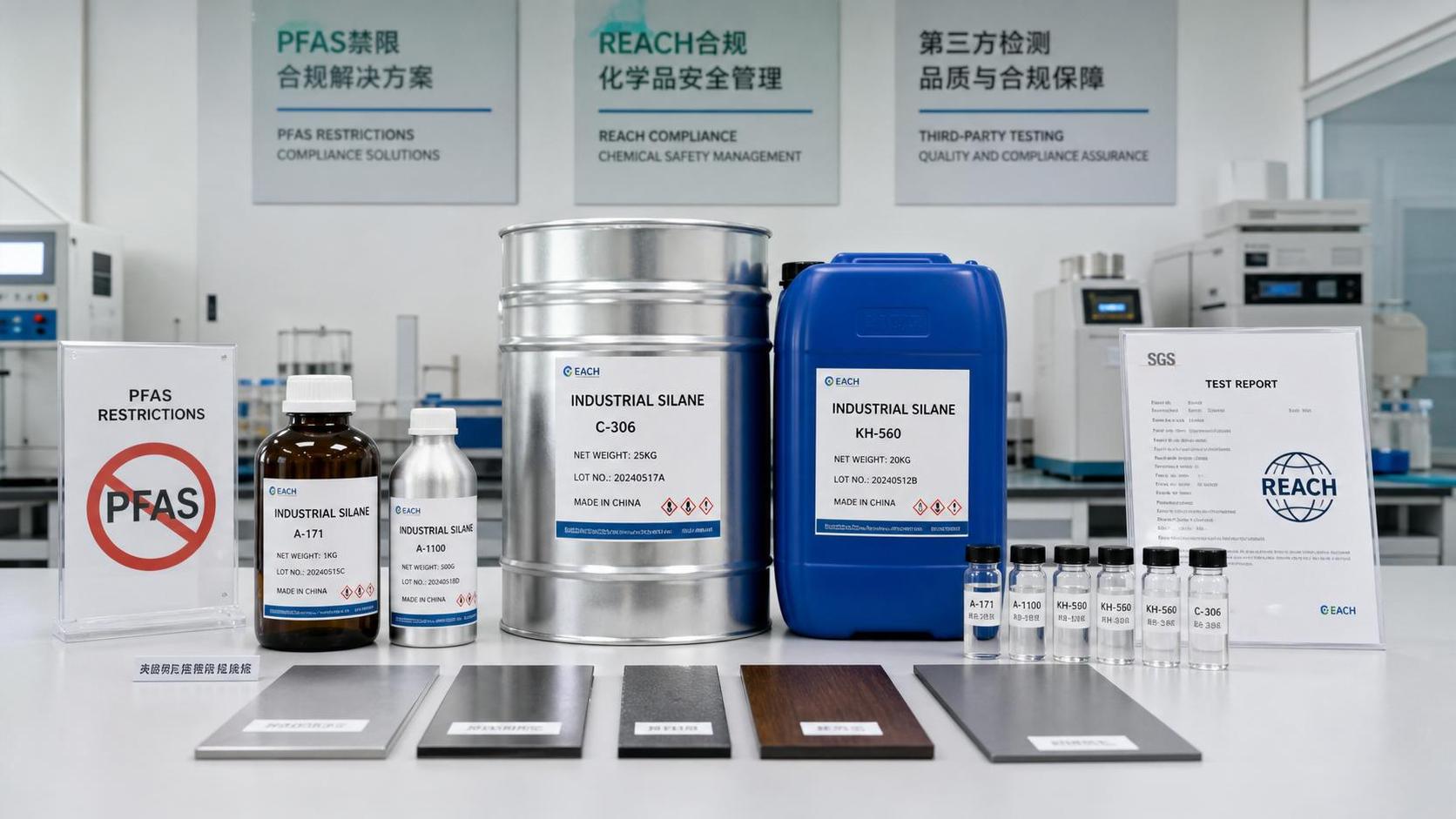
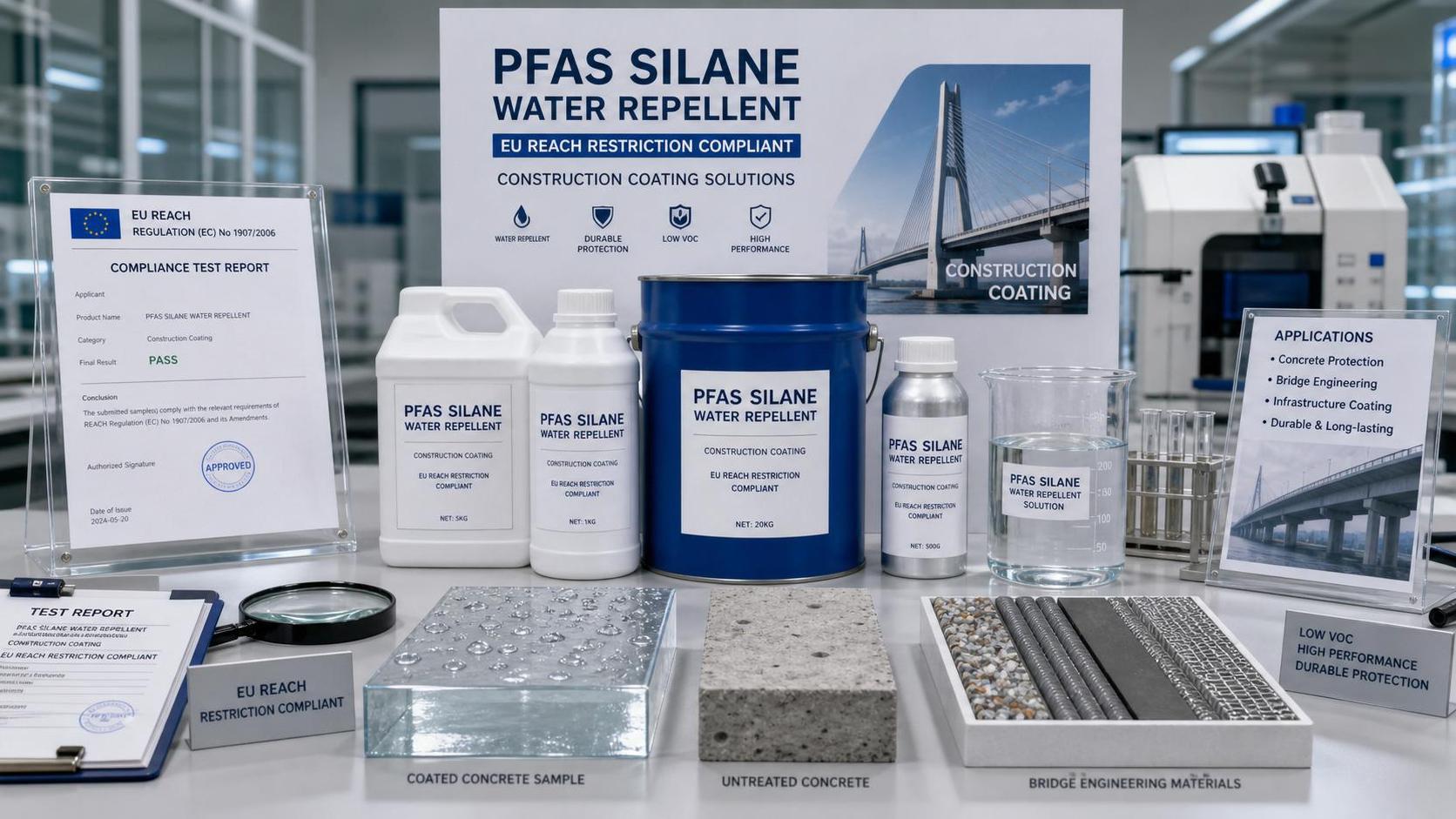
The confirmed change is that Regulation (EU) 2026/1387, issued by the European Commission on July 12, 2026, places PFAS silane water repellents under Entry 77 of REACH Annex XVII. The restriction applies to products such as trifluoropropyl methyl dimethoxy silane and perfluorooctyl triethoxy silane. According to the event summary provided, these substances may no longer be placed on the EU market or used from October 1, 2026.
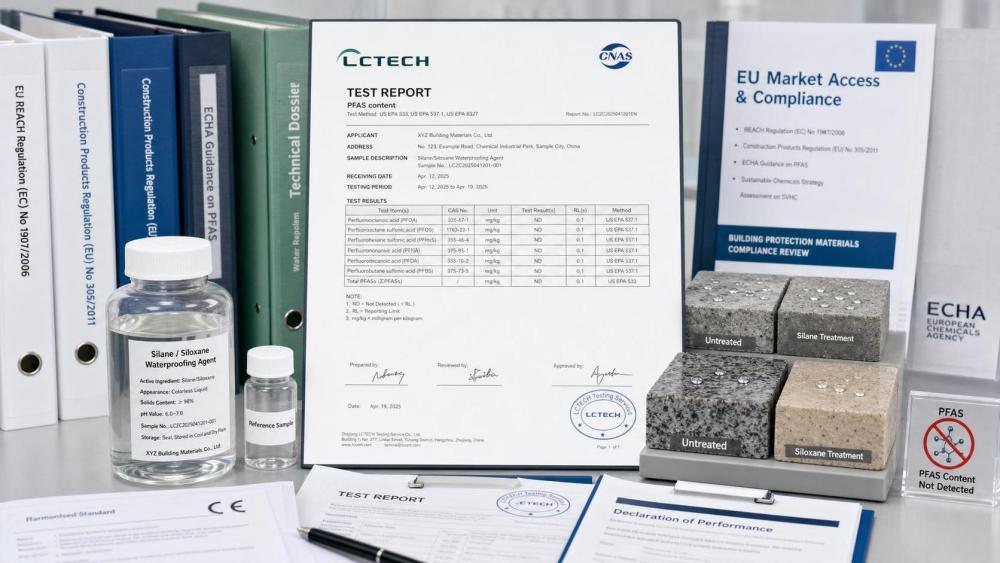
The scope described in the input covers all silane water repellent application scenarios, including building protection, concrete sealing, and stone waterproofing. The same summary also states that importers must provide a declaration of conformity and a PFAS content test report before customs clearance, with a limit of detection at or below 25 ng/g.
Where the pressure will show up first in the chain
Trade flows into the EU face an immediate document threshold
From an industry perspective, importers and exporters dealing in silane water repellents are likely to feel the change first at the border and transaction stage. The reason is straightforward: the rule described in the input combines a market access ban with pre-clearance document expectations. In practice, that means shipment readiness will depend not only on product composition, but also on whether conformity declarations and PFAS test reports are complete and aligned with customs timing.
Procurement teams will need to re-check product composition rather than product category alone
For buyers sourcing materials for building protection, concrete sealing, or stone waterproofing, the issue is not limited to whether a product is labeled as a silane water repellent. Analysis shows the more relevant question is whether the formulation involves PFAS-based silane chemistry covered by the restriction. Procurement review, approved supplier lists, technical data exchanges, and purchase specifications may all need closer screening against the new restriction language and testing requirement.
Manufacturers and formulators may see disruption in delivery commitments
Manufacturing and processing companies that produce or formulate silane water repellents for EU-bound use may be affected at the production planning and order fulfillment stages. If a product falls within the restricted scope, the impact can extend to formulation review, batch release documentation, customer declarations, and delivery scheduling. What deserves closer attention is that the rule is framed around both placing on the market and use, which can affect not only new sales but also how existing supply commitments are assessed for the EU market.
Testing and compliance service providers move closer to the transaction path
Testing laboratories and compliance support providers are also drawn more directly into the transaction cycle under the input facts. Because the summary specifies a PFAS content test report with LOD less than or equal to 25 ng/g, document quality, report scope, and timing are likely to become practical issues for customs clearance and customer acceptance. This does not by itself confirm a uniform market practice, but it does indicate that analytical documentation will matter earlier in the delivery chain than a routine post-shipment file review.
What companies should review now
Screen affected SKUs and technical files against the restricted scope
Analysis shows companies should first identify which products sold into the EU may fall within the PFAS-based silane water repellent scope described in the input. The immediate task is less about broad policy interpretation and more about SKU-level review, technical file checks, and consistency between product composition records and external product claims.
Prepare customs-facing compliance documents in advance of shipment
The input specifically mentions a declaration of conformity and a PFAS content test report before customs clearance. Observably, this turns documentation preparation into a pre-shipment issue rather than a back-office exercise. Companies involved in EU trade should pay close attention to whether document packages, testing language, and shipment files are ready early enough to avoid delays at the clearance stage.
Revisit supplier qualification and purchasing specifications
For procurement and sourcing teams, a practical area to watch is whether supplier documentation and purchasing specifications still match EU compliance needs after October 1, 2026. This is especially relevant where a product has historically been purchased by function, such as waterproofing or surface protection, without equally detailed review of PFAS-related silane content.
Keep watch on execution language beyond the headline restriction
The input confirms the restriction and the documentation requirement, but it does not provide broader enforcement detail or later interpretive guidance. It is therefore more appropriate to understand current business action as focused preparation: checking product scope, aligning test documentation, and monitoring any subsequent official wording that could affect customs practice, customer specifications, or tender documents.
Why this reads as an execution signal, not just a headline
Observably, this development is more than a general policy direction because the input includes a defined legal instrument, a specific REACH Annex XVII entry, a clear start date, named product examples, covered application scenarios, and a customs-facing documentation requirement. That combination makes it more appropriate to understand the event as an implemented compliance signal with operational consequences, rather than as a preliminary discussion point.
At the same time, analysis should remain measured. The provided information does not establish how every importer, customer, or enforcement point will apply the rule in practice. That is why continued attention to execution language, commercial document requirements, and market-side feedback remains necessary.
How the market is likely to read this change
In practical terms, the development signals that PFAS-related review for silane water repellents is moving into the core market-access process for the EU. For companies in building protection, concrete sealing, and stone waterproofing supply chains, the main significance lies in product scope confirmation, customs documentation readiness, and the risk of disruption where compliance files do not keep pace with shipment plans.
From an industry perspective, the most balanced reading is that this is a landed rule change with immediate preparation value, while some aspects of implementation and market response still warrant observation. It should be treated neither as a routine news item nor as a basis for assumptions beyond the facts provided.
Basis of this article and points still to verify
This article is generated on the basis of the user-provided news title, event date, and event summary. For developments of this type, commonly relevant source categories may include official regulatory notices, releases from supervisory authorities, customs or trade administration information, industry association updates, standards-related documents, and reporting from authoritative trade media.
No specific official source link was provided in the input, so the exact official publication link still needs to be verified on an ongoing basis. What also remains worth monitoring includes any later implementation detail, compliance interpretation, customs practice, tender document changes, market feedback, and how companies adjust testing, documentation, and delivery arrangements in response.
Related News
- Choosing a Silane Masonry Water Repellent for Brick, Stone, and Concrete FacadesAuthor :Structural Durability Strategist

- Concrete Infrastructure Coating Maintenance: How to Prevent Water Ingress and Rebar CorrosionAuthor :Structural Durability Strategist

- EU REACH Adds PFAS Silane Water Repellent BanAuthor :Structural Durability Strategist

- EU Restricts PFAS Silane Water Repellents From Oct. 2026Author :Structural Durability Strategist

- EU REACH Adds PFAS Silane Repellent Ban From Oct 2026Author :Structural Durability Strategist

- EU Restricts PFAS Silane Water Repellents From Oct. 2026Author :Structural Durability Strategist

- EU REACH Adds PFAS Restriction for Silane Water RepellentsAuthor :Structural Durability Strategist

- EU REACH Adds PFAS Silane Restriction From Oct. 2026Author :Structural Durability Strategist

- EU Bans PFAS Silane Water Repellents From Oct. 2026Author :Structural Durability Strategist
![]()
- EU REACH Adds PFAS Silane Ban From October 2026Author :Structural Durability Strategist

- EU REACH Restricts PFAS Silane Water RepellentsAuthor :Structural Durability Strategist

- EU REACH Adds PFAS Ban for Silane Water RepellentsAuthor :Structural Durability Strategist

- EU REACH PFAS Silane Proposal Nears Final HearingAuthor :Structural Durability Strategist

- EU REACH PFAS Silane Proposal Nears Final VoteAuthor :Structural Durability Strategist

- ECHA Opens PFAS Silane Coating ConsultationAuthor :Structural Durability Strategist

- EU Draft REACH Curbs PFAS Silane RepellentsAuthor :Structural Durability Strategist