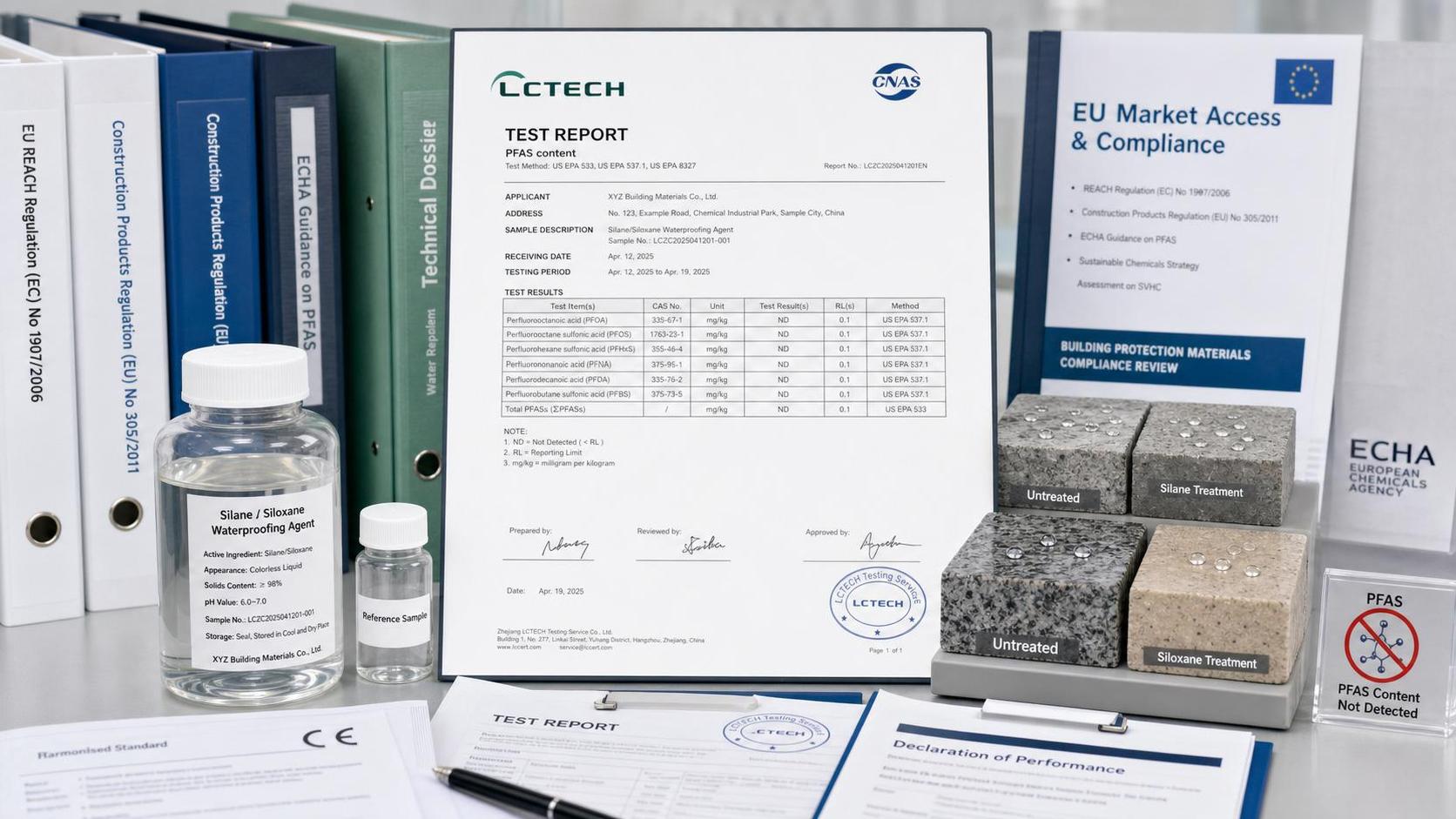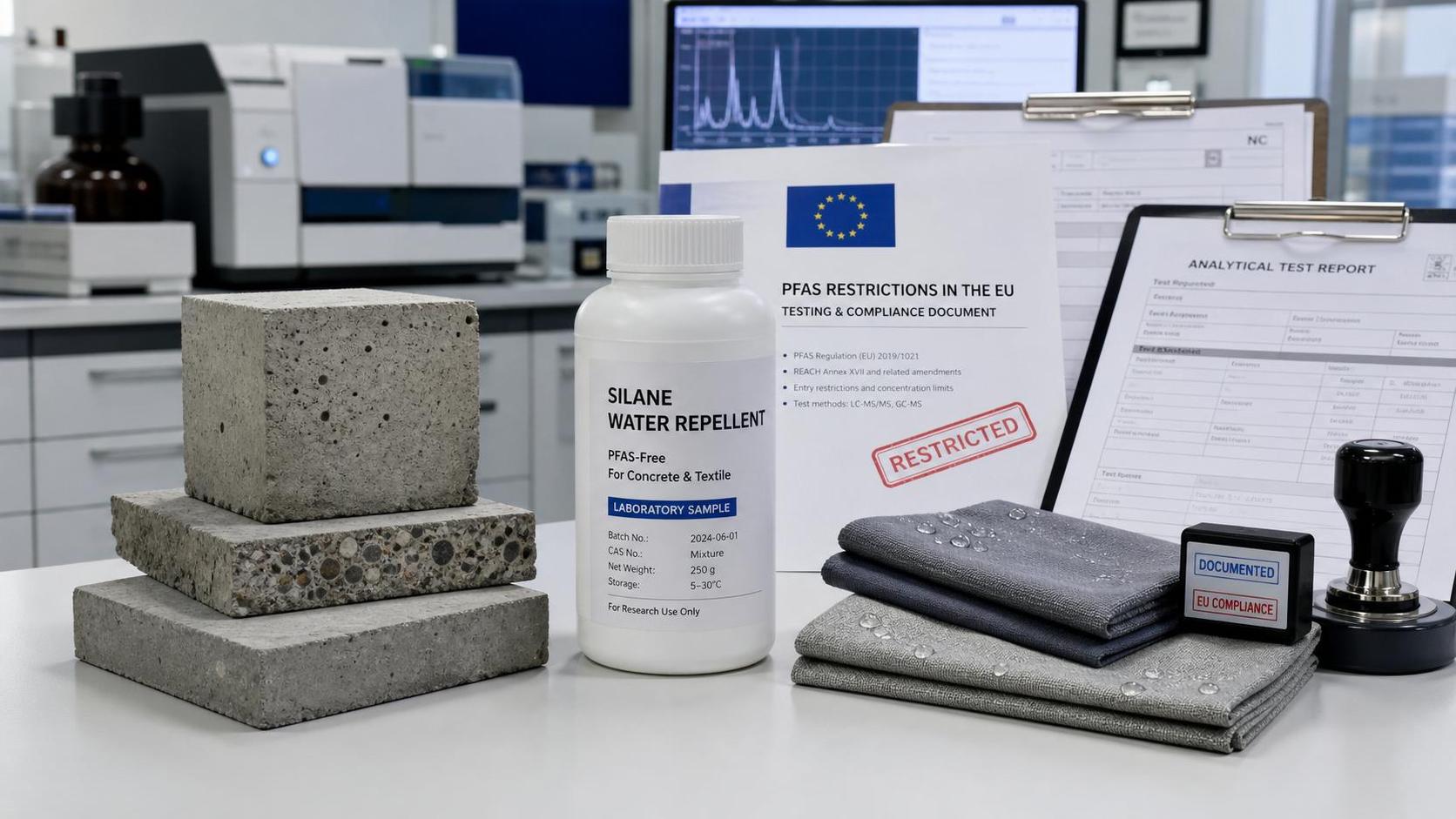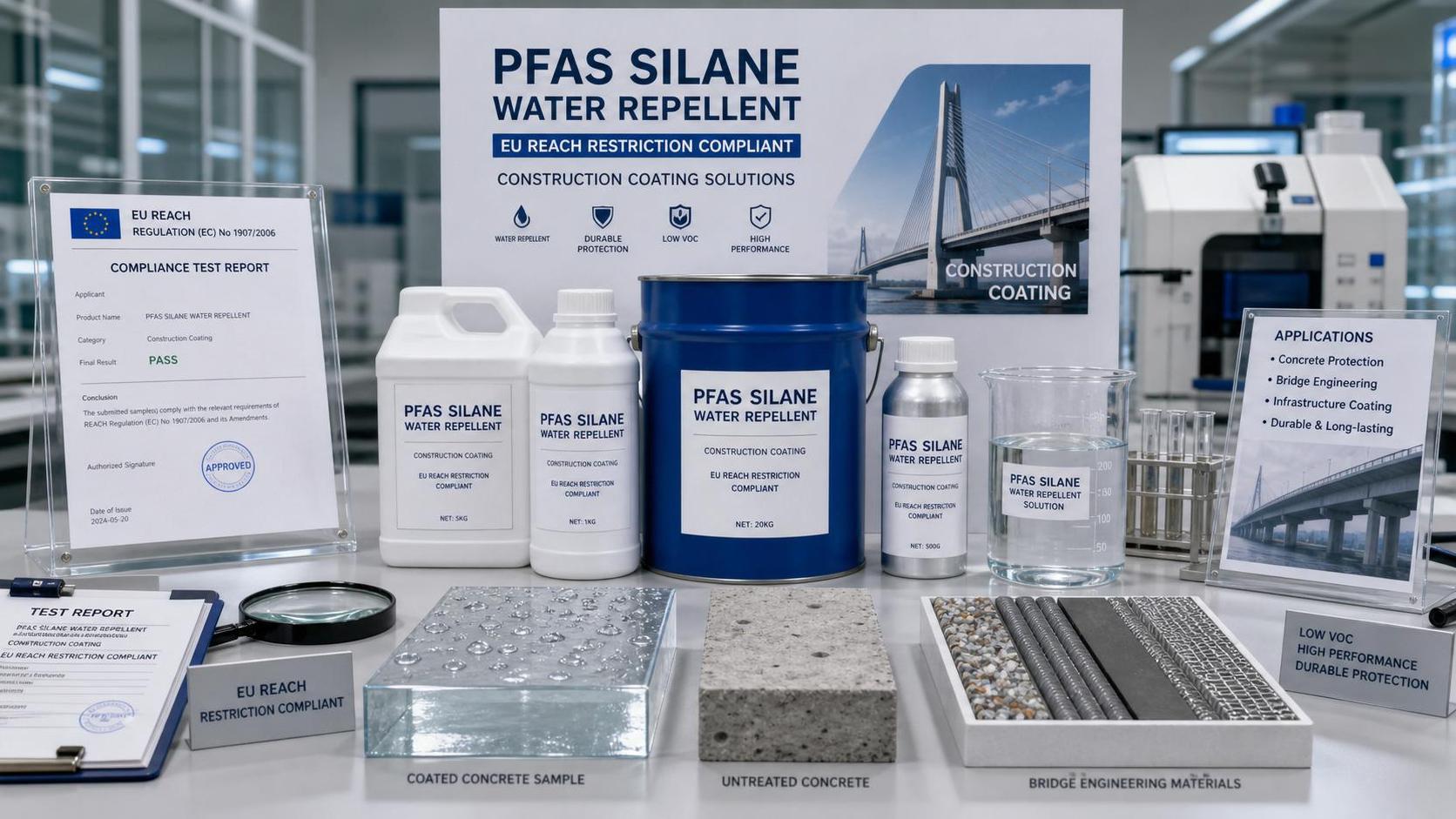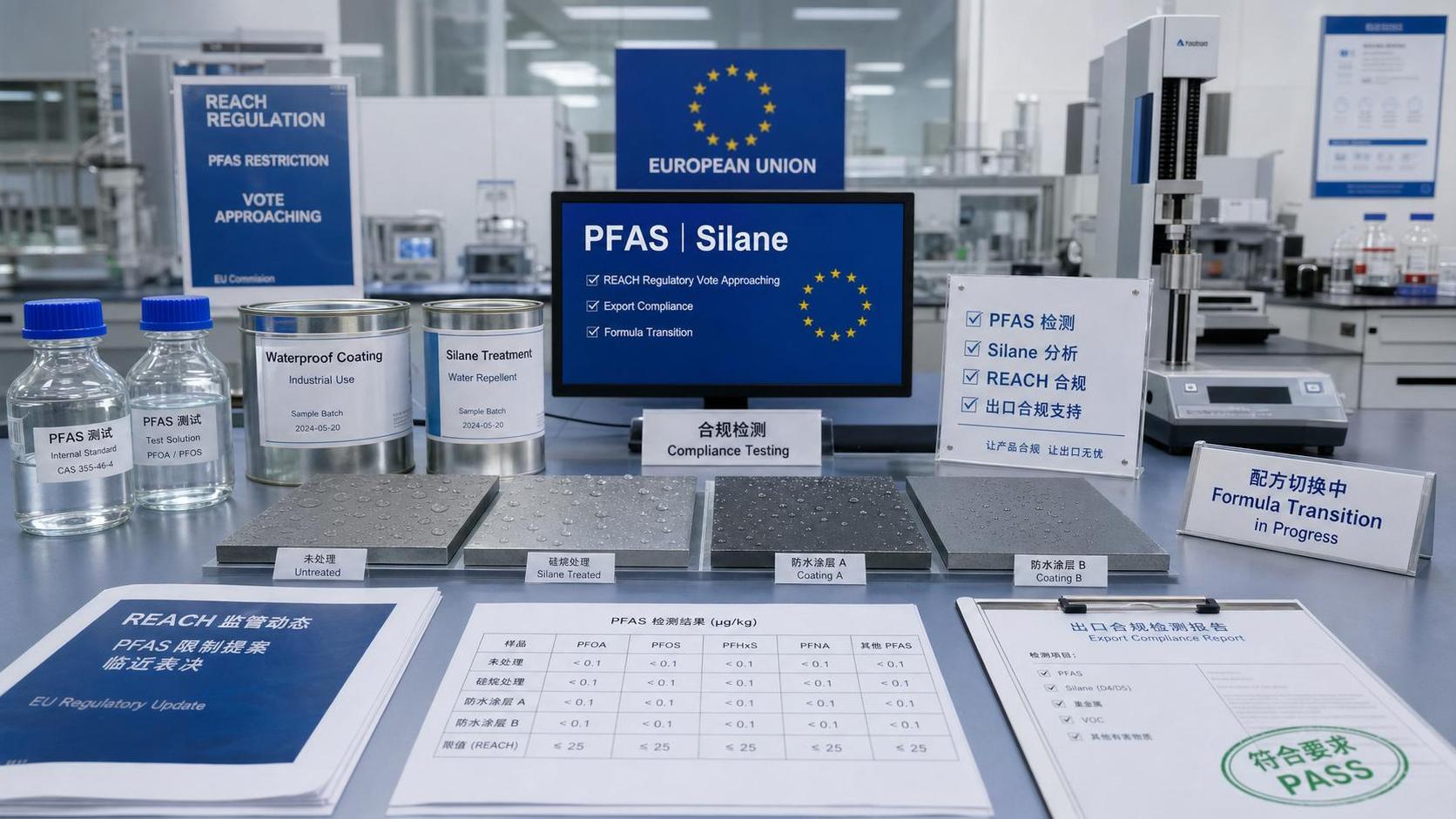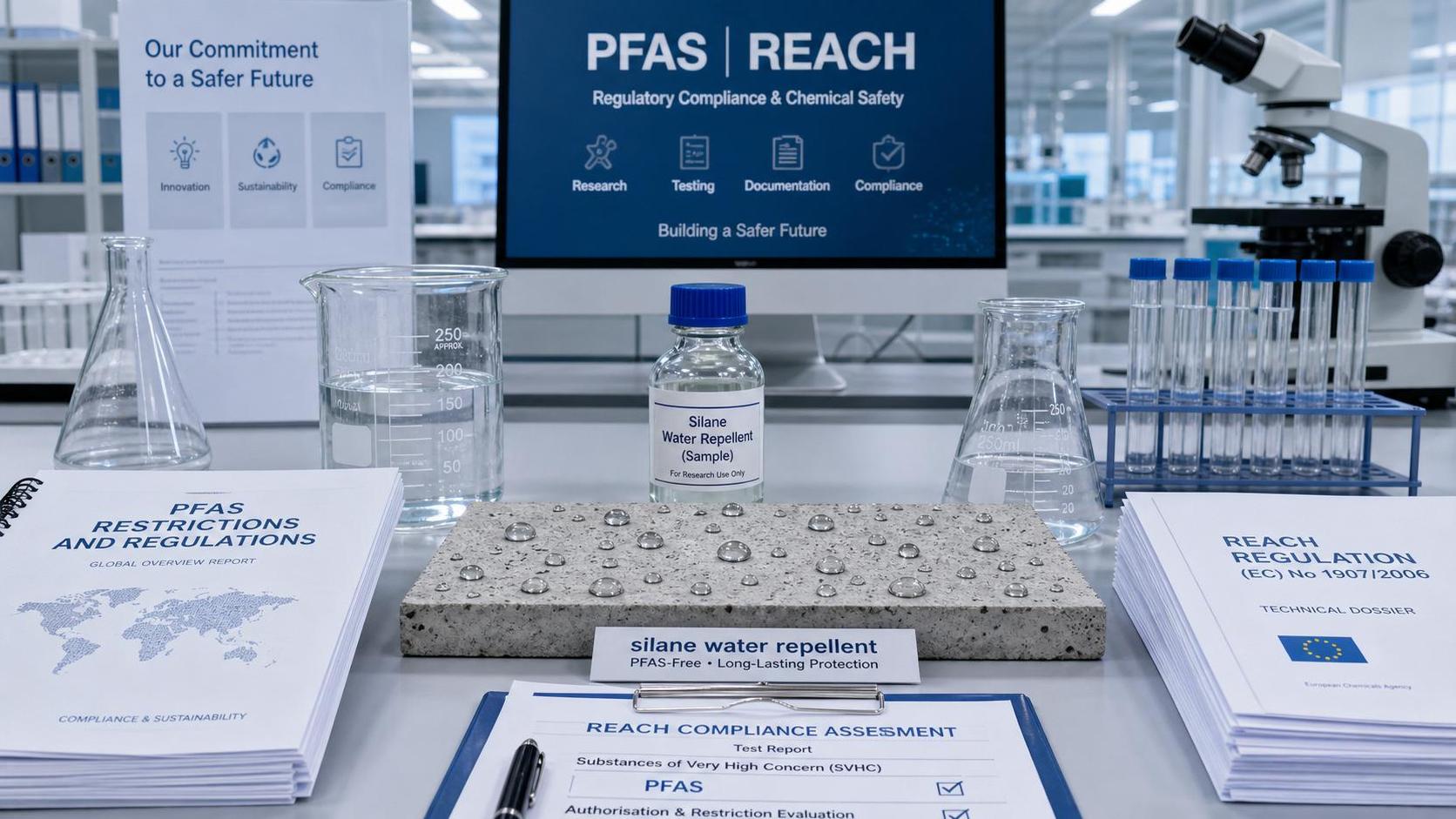




EU REACH Restricts PFAS Silane Water Repellents




On July 4, 2026, the European Commission released Regulation (EU) 2026/1382, adding PFAS-based silane water repellents to REACH Annex XVII and setting an October 1, 2026 market placement ban in the EU. For suppliers involved in construction, bridge works, and concrete protection applications, this matters as an immediate market access and compliance issue that can affect formulation choices, export readiness, documentation, and downstream delivery arrangements.
What the new restriction confirms
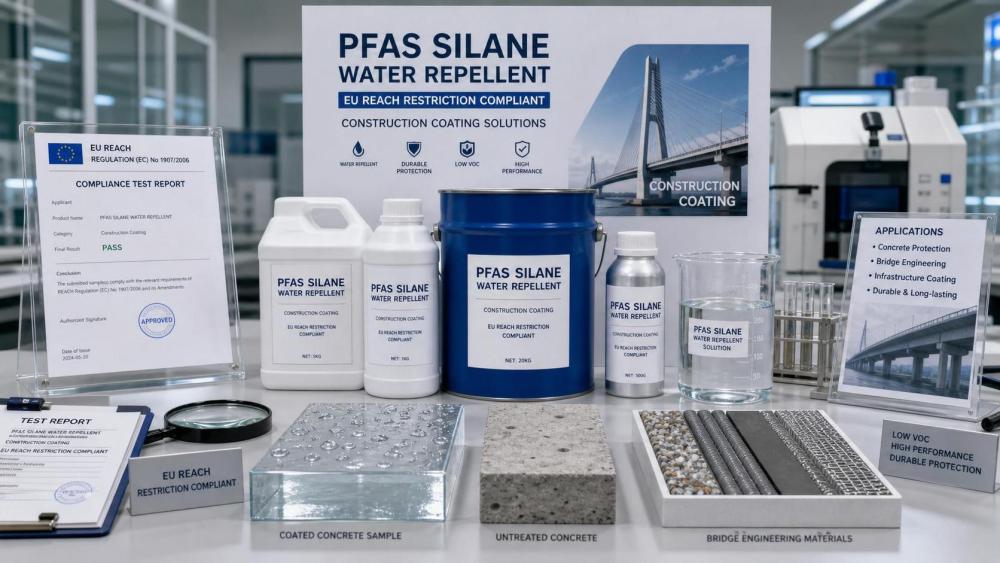
The confirmed change is that PFAS silane water repellents, including amino or epoxy silanes containing C8-C14 perfluoroalkyl chains, have been listed under Entry 77 of REACH Annex XVII through Regulation (EU) 2026/1382.
The event date provided is July 4, 2026. According to the provided summary, the restriction will apply from October 1, 2026, and products covered by this rule may no longer be placed on the EU market from that date.
The summary also states that the ban covers silane water repellents used in building, bridge, and concrete protection scenarios. It further states that Chinese exporters need to shift to PFAS-free alternative formulations and complete SCIP notification.
Where the pressure points will likely appear first
Export supply built around existing PFAS formulations
From an industry perspective, exporters are likely to feel the effect first where current product lines still rely on covered PFAS silane chemistry. The main impact is not limited to product design; it also reaches quotation validity, order acceptance, shipment planning, and customer-facing compliance statements for EU-bound goods.
What deserves closer attention is whether the product being offered for EU delivery still falls within the restricted scope after October 1, 2026. For these businesses, formulation status and supporting compliance records become directly linked to marketability.
Procurement and specification management in project-linked sales
For buyers and procurement teams handling materials for construction, bridge, or concrete protection uses, the rule change can affect specification alignment and approved product selection. Where purchasing documents, technical sheets, or bid materials still reference covered silane water repellents, procurement cycles may need adjustment.
Observably, the practical issue is not only substitution, but also whether purchasing documentation and technical approval workflows can move in step with the restriction date. Attention should remain on product specifications, supplier declarations, and any compliance documents tied to delivery acceptance.
Channel, distribution, and delivery coordination
Distributors and other supply chain service providers may face exposure where inventory planning, contract fulfillment, or cross-border delivery schedules extend across the October 2026 deadline. The business risk here is tied to whether goods intended for the EU market remain placeable under the new restriction.
Analysis shows that channel participants should pay particular attention to delivery timing, product identification, and document consistency, especially when handling stock that may have been developed under earlier formulation assumptions.
What companies should review now
Check whether affected products remain in active EU sales pipelines
The most immediate review point is whether silane water repellents for EU customers include the covered PFAS-related chemistry described in the provided summary. This is especially relevant for materials used in building, bridge, and concrete protection applications.
Prepare the switch in technical and compliance files
The provided information indicates that Chinese exporters need to move to PFAS-free alternative formulations and complete SCIP notification. In practical terms, companies should review whether product dossiers, declarations, technical data, and related compliance records remain aligned with the products they plan to place on the EU market.
Watch tender and procurement documents for wording changes
Where projects depend on formal specifications or bid documentation, companies should monitor whether customers and buyers update product descriptions, compliance conditions, or acceptance requirements to reflect the new REACH Annex XVII restriction. The available input does not provide detailed enforcement practice, so this remains a monitoring point rather than a confirmed outcome.
Review delivery timing and after-sales traceability
Businesses with orders near the October 1, 2026 date should pay attention to shipment timing, material traceability, and document retention. Analysis shows that delivery and post-delivery questions may arise if product identity, formulation status, or compliance support cannot be clearly matched to EU market placement requirements.
How this change is best understood at this stage
Observably, this is more than a general policy signal. The input describes a published regulation, a defined REACH Annex XVII entry, and a stated application date, which makes it more appropriate to understand this as a rule already moving into implementation rather than a preliminary consultation-stage development.
At the same time, the provided information does not include detailed enforcement language, customer acceptance practice, or market-level transition feedback. For that reason, continued attention is still warranted around execution details, documentation expectations, and how procurement and tender documents respond in practice.
A practical reading for the market
This development should be read as a concrete compliance change for PFAS-containing silane water repellents intended for the EU market. Its importance lies in how quickly it can affect formulation decisions, export preparation, procurement alignment, and delivery readiness across the supply chain.
Current industry understanding is best kept measured: the core rule change is clear from the provided information, while the exact market response and implementation detail still require observation as companies, buyers, and compliance functions adjust.
About the information used here
This article is based on the user-provided news title, event date, and event summary. For developments of this type, relevant source categories commonly include official regulatory releases, notices from supervisory authorities, customs or trade administration updates, industry association communications, standard-setting documents, and reporting by established professional media.
No specific official source link was provided in the input, so the exact official publication path still needs to be verified on an ongoing basis. Continued monitoring is also needed for implementation detail, compliance interpretation, tender document updates, industry feedback, and how companies execute the transition in practice.
Related News
- Choosing a Silane Masonry Water Repellent for Brick, Stone, and Concrete FacadesAuthor :Structural Durability Strategist

- Concrete Infrastructure Coating Maintenance: How to Prevent Water Ingress and Rebar CorrosionAuthor :Structural Durability Strategist

- EU REACH Adds PFAS Silane Water Repellent BanAuthor :Structural Durability Strategist

- EU Restricts PFAS Silane Water Repellents From Oct. 2026Author :Structural Durability Strategist

- EU REACH Adds PFAS Silane Repellent Ban From Oct 2026Author :Structural Durability Strategist

- EU Restricts PFAS Silane Water Repellents From Oct. 2026Author :Structural Durability Strategist

- EU REACH Adds PFAS Restriction for Silane Water RepellentsAuthor :Structural Durability Strategist

- EU REACH Adds PFAS Silane Restriction From Oct. 2026Author :Structural Durability Strategist

- EU Bans PFAS Silane Water Repellents From Oct. 2026Author :Structural Durability Strategist
![]()
- EU REACH Adds PFAS Silane Ban From October 2026Author :Structural Durability Strategist

- EU REACH Restricts PFAS Silane Water RepellentsAuthor :Structural Durability Strategist

- EU REACH Adds PFAS Ban for Silane Water RepellentsAuthor :Structural Durability Strategist

- EU REACH PFAS Silane Proposal Nears Final HearingAuthor :Structural Durability Strategist

- EU REACH PFAS Silane Proposal Nears Final VoteAuthor :Structural Durability Strategist

- ECHA Opens PFAS Silane Coating ConsultationAuthor :Structural Durability Strategist

- EU Draft REACH Curbs PFAS Silane RepellentsAuthor :Structural Durability Strategist