



Crispy Powder for Seafood and Chicken: Texture Control Guide




Procurement Starts With the Food Format
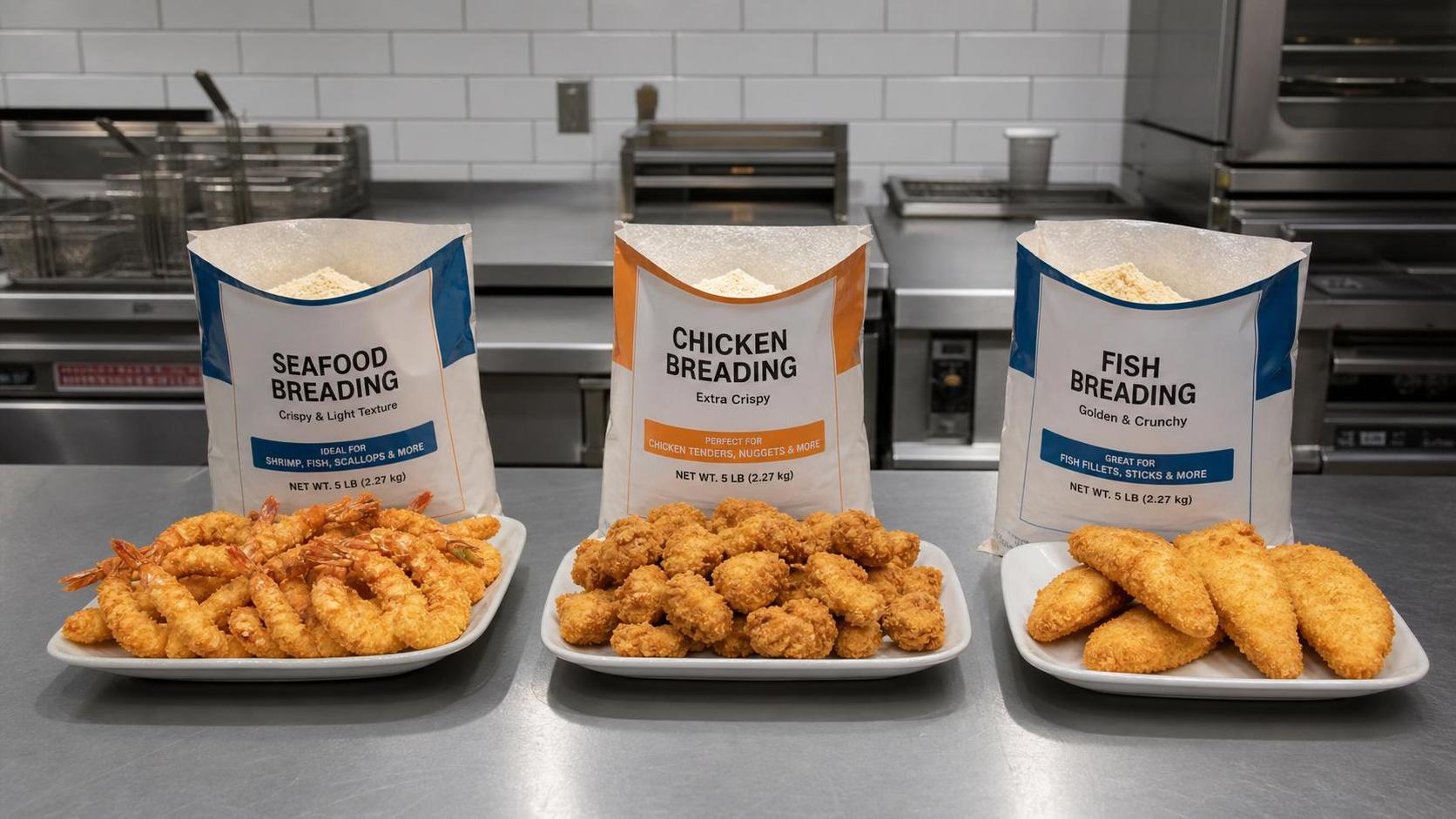
A coating powder for seafood and chicken should be purchased according to the final food format, not only according to supplier descriptions. Shrimp, fish fillets, chicken strips, wings, nuggets, and prepared snacks each need a different balance of adhesion, bite, color, and holding performance. A product that works well on chicken strips may be too heavy for delicate seafood.
The buyer should define the cooking method, service time, expected surface texture, flavor level, and packaging route before requesting quotes. This helps the supplier recommend a relevant sample and helps the buyer avoid approving a powder that looks good in a small trial but does not fit the production or service channel.
A procurement file should also state which product family the approval covers. If the approved sample is for chicken tenders, it should not automatically be used for shrimp, fish fillets, or vegetable snacks without another trial. This protects the buyer from treating one successful test as a universal approval. It also helps the supplier understand whether the buyer needs a stronger crust, a cleaner seafood color, a lighter bite, or better delivery holding. When the phrase fried chicken coating powder appears in a purchase request, the buyer should still explain the exact application, because chicken coating can mean hand-breaded restaurant items, frozen par-fried products, central-kitchen strips, or retail nuggets.
Texture Control as a Purchasing Requirement
Texture control should be written into the purchasing conversation. The buyer can describe whether the desired result is light and crisp, rough and crunchy, fine and even, or visibly textured. The coating system may include predust, batter, powder, crumb, seasoning, or a combination of these materials. Procurement should ask which parts of the system the supplier's product is designed to support.
For a production team, texture is measured through repeatability. The first test piece is less important than whether the coating performs the same across batches, operators, and holding conditions. Ask the supplier how consistency is monitored, whether retained samples are kept, and how future lots should be compared with the approved sample.
Supplier Qualification Before Price Negotiation
Price matters, but qualification should come first. A supplier should provide representative samples, product usage guidance, storage recommendations, ingredient or allergen information, and clear communication about packaging. If the buyer needs private-label or distributor support, label and carton requirements should be discussed before order confirmation.
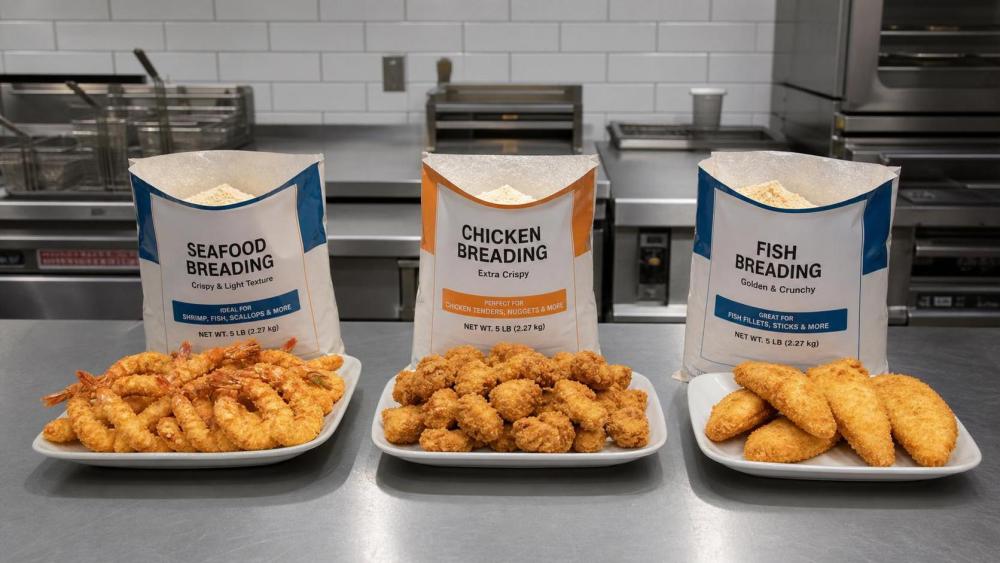
When evaluating fried chicken coating powder, the procurement team should also ask about seafood use. Seafood applications may need lighter color, less aggressive flavor, and careful adhesion because the surface can be more delicate than chicken.
Quotation comparison should include what is included in the supplier's service. One supplier may quote only the dry blend, while another may support application guidance, packaging review, and repeat-order checks. The lower number is not always the lower-risk choice if the buyer must spend extra time solving avoidable handling or documentation problems. Procurement should record these service differences beside the price.
Packaging and Opened-Pack Use
A coating powder can lose value if packaging does not protect it. Bulk bags should be easy to handle, well sealed, and suitable for the buyer's usage speed. If a large bag remains open for too long, moisture and odor exposure may create quality problems. Smaller packs may cost more but can reduce waste in slower operations.
Receiving teams should inspect cartons for damage, water marks, and broken seals. Production teams should keep opened material covered and dry. Procurement should include these handling realities in the buying decision, because a cheaper pack can become expensive if it causes clumping or inconsistent coating.
Decision Table
The following table gives procurement teams a simple way to compare coating powder suppliers before confirming an order.
Sample Approval Workflow
Request samples only after defining the food application. Test the powder on seafood and chicken separately if both are planned. Record pickup, color, crispness, fall-off, flavor, oil impression, and holding behavior. If possible, include kitchen staff or line operators in the test because they see handling issues that procurement may miss.
Once a sample is approved, document the agreed product name, pack size, label details, storage instructions, and intended use. Keep a retained sample. For repeat orders, compare new shipments against the approved reference before releasing them into normal production.
Buyer Checklist
- Define the food format and cooking process.
- Confirm whether the powder is for chicken, seafood, or both.
- Test in the actual fryer, oven, or air-fryer process.
- Review packaging and storage requirements.
- Check ingredient, allergen, and label information.
- Confirm pack size and opened-bag handling.
- Keep approved samples and written specifications.
- Discuss corrective action if future lots differ from the approved result.
Implementation Notes for This Article Type
For a purchasing-decision article, the buyer should compare commercial risk and technical fit at the same time. A low quotation does not help if the product creates waste, relabeling work, receiving disputes, or inconsistent kitchen results. The decision file should include sample findings, specification notes, packaging confirmation, storage guidance, required documents, and the person's name who approved each point.
Procurement teams should also think about internal handoff. The person negotiating the order may not be the person receiving cartons, opening bags, running the fryer, or checking labels. A good supplier decision gives each team enough information to handle the product correctly. That includes lot coding, pack size, storage rules, opened-pack procedures, and a clear route for raising quality questions.
A practical comparison sheet can prevent over-focusing on unit price. Include sample performance, pack convenience, expected waste risk, documentation readiness, response speed, and repeat-order control. If two suppliers are close in price, the one that reduces handling uncertainty may be the better business decision. This is especially true for export buyers and distributors with several warehouse steps.
Before confirmation, buyers should ask what happens if the shipment differs from the approved sample. The answer should include retained samples, photo evidence, lot traceability, and a corrective communication process. This does not need dramatic language; it simply gives both sides a factual way to protect the order.
The final purchasing recommendation should be written in plain operational language. Instead of only saying that a supplier is approved, note why it is approved, which application the approval covers, which pack format was tested, and what storage or documentation limits remain. This makes the decision usable after the original buyer is no longer handling the file.
A final approval meeting should include procurement, QA, and the team that will actually use the ingredient. Each group sees a different risk, and the best purchasing decision usually comes from comparing those risks before the order is placed.
Keep that record with the supplier file for future reorder reviews and audits across teams later.
FAQ
Should seafood and chicken use the same coating?
They can share a coating only after testing. Seafood may need a lighter profile and gentler handling than chicken.
What should buyers compare besides price?
Compare application fit, documentation, packaging, storage guidance, repeatability, and supplier communication.
How many samples should be tested?
At least enough to compare texture options and repeat the test under real cooking and holding conditions.
Why does pack size matter?
Pack size affects opened-bag exposure, moisture risk, handling convenience, and waste.
What makes approval reliable?
A written specification, retained sample, and real-process test make approval more reliable than a tasting alone.
Related News
- Selecting Polyurethane Coatings for Abrasion, UV Exposure, and Chemical ServiceAuthor :Aerospace Polymer Scientist

- How coatings in aerospace are qualified for exterior aircraft surfacesAuthor :Aerospace Polymer Scientist

- How to Evaluate UV Resistant Coatings for Aircraft Exterior Durability?Author :Aerospace Polymer Scientist

- How to Evaluate Aerospace Coating Systems for Corrosion, Heat, and WeightAuthor :Aerospace Polymer Scientist

- What Determines Aircraft Coating Durability in UV, Fuel, and Salt Exposure?Author :Aerospace Polymer Scientist

- Crispy Powder for Seafood and Chicken: Texture Control GuideAuthor :Aerospace Polymer Scientist

- Aerospace Coatings for Military Aircraft: Key Performance Specs and Approval FactorsAuthor :Aerospace Polymer Scientist

- How to Choose UV Resistant Polyurethane Topcoats for Aviation and Harsh Sunlight ExposureAuthor :Aerospace Polymer Scientist

- How to Select Polyurethane Topcoat Systems for Bridges: Durability, Color Retention, and CostAuthor :Aerospace Polymer Scientist

- Aerospace Paint Systems Weather Resistance: What to Test Before ApprovalAuthor :Aerospace Polymer Scientist

- Aerospace Coatings Export Market: Key Regions, Demand Drivers, and Entry Risks for SuppliersAuthor :Aerospace Polymer Scientist

- How to Evaluate Aircraft Coating Erosion Resistance for Leading Edges and High-Wear ZonesAuthor :Aerospace Polymer Scientist

- Polyurethane Ship Topcoat Problems: Causes of Gloss Loss, Peeling, and Early ChalkingAuthor :Aerospace Polymer Scientist

- How to Choose a Polyurethane Ship Topcoat for UV, Salt Spray, and Gloss RetentionAuthor :Aerospace Polymer Scientist

- How to Evaluate a Polyurethane Aerospace Coating Supplier for OEM and MRO NeedsAuthor :Aerospace Polymer Scientist

- Why Coating Film Properties Impact Resistance Matters for Transport and Heavy EquipmentAuthor :Aerospace Polymer Scientist